Table of Contents
What is Niacinamide?
What Does Niacinamide Do for Your Skin?
The Real Difference Between 5% and 10%
Does a Higher Concentration Always Mean Better Absorption?
How to Use Niacinamide Correctly
Which One Fits You?
Dermaelle Niacinamide Serums
Frequently Asked Questions (FAQs)
Many of us stand in front of the skincare shelf or scroll through websites seeing a 5% Niacinamide serum right next to a 10% one, and the confusion begins. You might wonder if the higher number is always better or if it is a problem to jump straight to the high concentration.
The answer is not as simple as you might think. By the time you finish this article, you will know exactly how to choose the Niacinamide product that perfectly fits your skin. Because understanding how active ingredients react in a hot and humid climate is crucial, Dermaelle serums are specifically Made for Egypt and strictly Dermatologically Approved to deliver maximum results without the risk of irritation.
What is Niacinamide?
Niacinamide is the active form of Vitamin B3, and it is one of the most thoroughly researched ingredients in skincare history. It is not a passing trend. It is an ingredient with scientifically proven results that targets multiple skin concerns simultaneously.
When absorbed, it works on a cellular level, helping the skin renew itself, regulate its secretions, and maintain its natural barrier. This versatility makes it suitable for almost all skin types, including highly sensitive skin.
What Does Niacinamide Do for Your Skin?
Before we dive into the percentages, let us look at the overall benefits you get when adding Niacinamide to your daily routine:
Regulates Sebum and Oil: It reduces the amount of oil produced by the sebaceous glands. This directly reduces annoying midday shine, clogged pores, and blackheads. This is especially important in Egypt, where heat and humidity naturally trigger excess oil production.
Minimizes Pores: By strengthening the skin barrier from the inside, it makes pores look smaller and cleaner over time.
Even Skin Tone: It prevents the transfer of melanin pigment to the outer layers of the skin, gradually fading dark spots, acne scars, and sun-induced hyperpigmentation.
Strengthens the Skin Barrier: It stimulates the skin to produce ceramides, making your natural barrier stronger and better at retaining moisture and fighting off environmental aggressors.
Anti-Inflammatory: It calms irritated skin and reduces redness, making it an essential treatment for sensitive or acne-prone skin.
The Real Difference Between 5% and 10%
Niacinamide 5%
This is the concentration most frequently backed by scientific research. Studies show that 5% Niacinamide visibly reduces hyperpigmentation after just 4 weeks of consistent use. More importantly, research proves that 5% molecules actually absorb better into the skin than higher concentrations because the lower volume passes through the skin barrier more easily to deliver its full effect.
This makes it ideal for:
Sensitive skin or skin prone to irritation.
Beginners trying Niacinamide for the first time.
Normal skin without severe or advanced issues.
Daily use, both morning and night, without worrying about irritation.
Niacinamide 10%
The higher concentration delivers faster, more noticeable results for specific cases, particularly in controlling severe excess oil, minimizing very large pores, and treating stubborn hyperpigmentation. However, the final result is not massively different from the 5%. The main difference lies in the speed at which you reach that result.
This makes it ideal for:
Very oily or combination skin with enlarged pores.
Skin with frequent breakouts and stubborn dark acne marks.
Experienced users who have successfully used 5% in the past.
Those looking for faster results in sebum regulation.
Does a Higher Concentration Always Mean Better Absorption?
In clinical studies, researchers found that when skin is exposed to 10% Niacinamide, the actual absorption rate of the molecules drops compared to the 5%. The reason is that large amounts of the active ingredient can overwhelm the skin barrier, causing the molecules to sit on the surface rather than penetrate deeply. This is why more is not always better when it comes to skincare chemistry.
How to Use Niacinamide Correctly
Where it goes in your routine: Apply it right after your cleanser and toner, and before your moisturizer. In the morning, always finish your routine with sunscreen.
Best pairings: Niacinamide plays well with most ingredients. It pairs beautifully with Hyaluronic Acid, Ceramides, and Retinol. In fact, studies show that pairing it with Retinol helps reduce the irritation that Vitamin A usually causes.
What to avoid pairing it with: Avoid using it in the exact same step as a high-concentration Vitamin C. It is not dangerous, but they can compromise each other's effectiveness. The easiest fix is using Vitamin C in the morning and Niacinamide at night.
When will you see results? Skin texture and radiance usually improve within the first two weeks. Noticeable changes in pores and hyperpigmentation typically appear after 4 to 8 weeks of consistent use. Consistency beats high doses every time.
Which One Fits You?
If your skin is sensitive or you are a beginner: Start with 5% and use it morning and night. It is more than enough and its results are scientifically proven.
If your skin is very oily, breakout-prone, or has large pores: The 10% is the right choice for you, but start slow. Use it every other day for the first two weeks, then graduate to daily use.
If you are unsure of your skin type: Go straight for the 5%. You will get all the benefits of Niacinamide with absolutely zero risk.
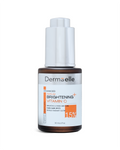
Dermaelle Niacinamide Serums
At Dermaelle, we developed two concentrations specifically designed for Egyptian skin and the hot climate. Both formulas are fast-absorbing, oil-free, fragrance-free, and dermatologically approved.
NiaSerum 5%: Perfect for daily use, morning and night. A gentle formula that suits all skin types, including sensitive skin. It is the ultimate choice if you are using Niacinamide for the first time or if your skin reacts easily.
NiaSerum 10%: An advanced concentration for oily skin, enlarged pores, or stubborn hyperpigmentation that requires a stronger, faster treatment.
Frequently Asked Questions (FAQs)
Is Niacinamide safe for sensitive skin?
Yes, Niacinamide is one of the safest active ingredients for sensitive skin. It is best to start with a 5% concentration and introduce it slowly. Clinical trials prove it rarely causes irritation or adverse reactions.
Can I use Niacinamide with Retinol?
Yes, this is actually one of the best combinations. Niacinamide helps soothe the irritation that Retinol can cause, especially when you are just starting. You can layer them at night, or apply Niacinamide first, wait a few minutes, and follow with your night treatment.
Can I use Niacinamide every day?
Yes, the 5% concentration is perfectly safe for daily use, morning and night. For the 10%, it is highly recommended to start by using it only at night or twice a week, and gradually increase your usage.
When will I see results from Niacinamide?
Differences in texture and glow usually start showing around the second week. However, its effect on hyperpigmentation and pores requires 4 to 8 weeks of consistent use to see clear results.
Does Niacinamide whiten the skin?
Not in the sense of changing your natural skin tone. Rather, it evens out the complexion, reduces dark spots, and fades acne marks. This gives the skin a brighter, more unified, and radiant appearance.
Is Niacinamide good for dry skin?
Yes, Niacinamide is excellent for all skin types. For dry skin specifically, it helps strengthen the skin barrier and improves its ability to lock in moisture, making it highly beneficial even if you do not struggle with excess oil.
Can I combine Niacinamide with Vitamin C?
You can, but it is better not to layer them in the exact same step. The best approach is to use Vitamin C in your morning routine and Niacinamide at night, or wait at least 15 minutes between applying them.
A higher number does not always mean a better product. The key is choosing the concentration that suits your specific skin and using it consistently. The real secret to great skin is always consistency, not just the dose.
Ready to transform your skin with the perfect concentration?
Shop the Dermaelle Advanced Niacinamide Kit today for a complete, dermatologist-approved routine.